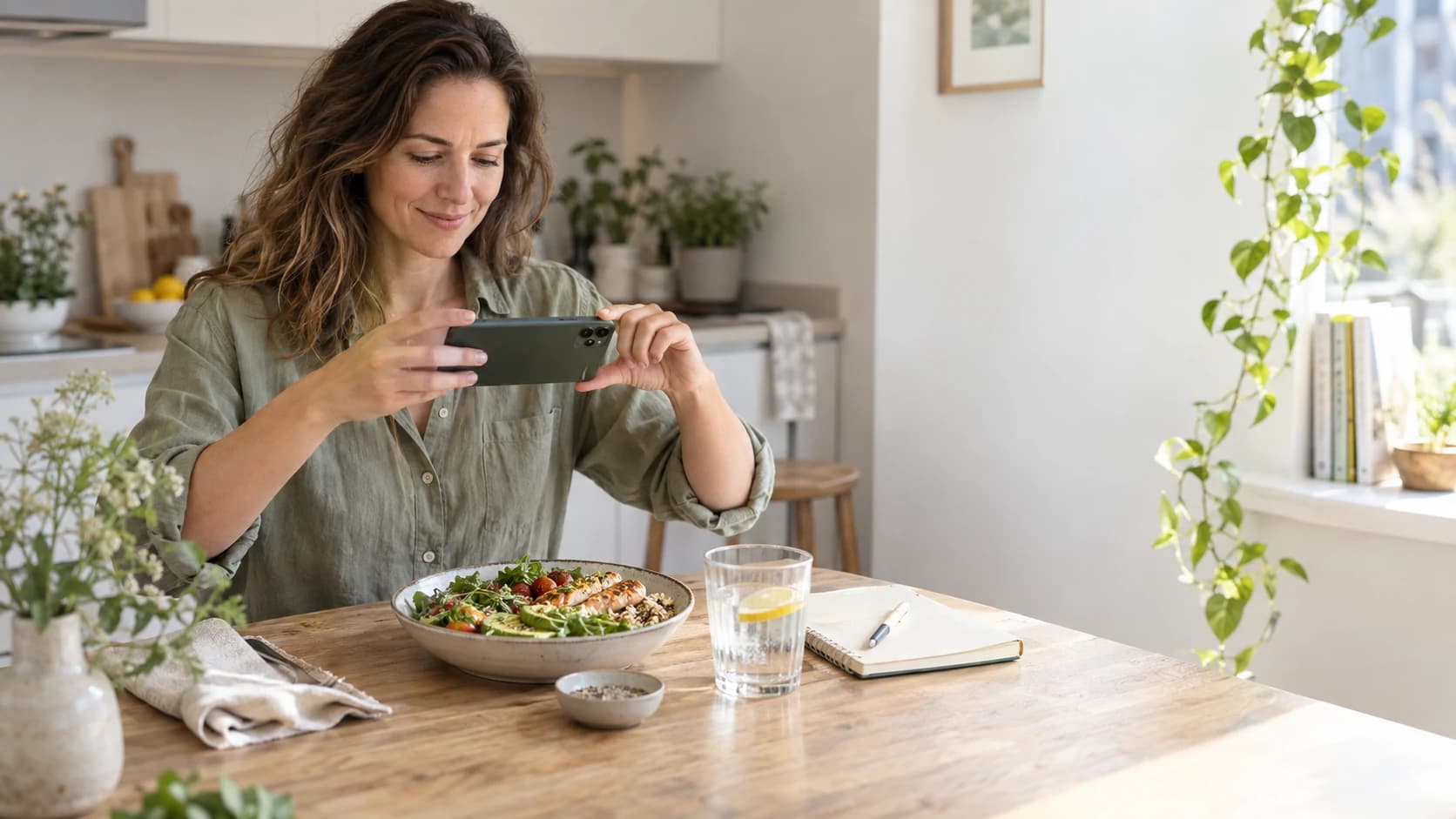
AI food photo analysis uses visual patterns to suggest what may be on a plate and to estimate nutrition information. It can be a convenient starting point for a food diary because the user does not need to search for every visible item from scratch. The output is still an estimate: a camera cannot reliably see every ingredient, preparation method, portion weight, or food hidden beneath another item.
The most reliable workflow treats the scan as a draft. Take a clear photo, review the proposed foods, correct what the camera could not know, and save only the amount you actually ate. This page explains that workflow and the situations in which manual entry or professional guidance is the better choice.
Section 01
What a meal photo can and cannot reveal
The image supplies visual evidence. It does not supply the full recipe or the user’s personal health context.
Likely food categories
Color, shape, texture, and context can help a model suggest visible foods. Similar-looking dishes can still be confused, especially when sauces, fillings, or mixed ingredients hide the details.
Approximate portions
A photo may support a rough portion estimate when the plate and all items are visible. Perspective, bowl depth, distance, and missing scale make exact grams difficult to infer.
Nutrition estimates
Calories and macronutrients depend on the identified food, assumed portion, recipe, and database entry. Oil, dressings, sugar, and cooking methods can materially change the result without being obvious in the image.
What was consumed
A pre-meal photo shows what was served, not what was eaten. The user should adjust leftovers, shared items, second portions, and tasting samples before a diary entry is final.
Section 02
A five-step review workflow
Accuracy improves when the scan is one step in a short human-reviewed process.
1. Photograph the whole meal
Use even light, keep the camera steady, and include the full plate. If several containers make up one meal, capture them clearly rather than hiding side dishes outside the frame.
2. Add visual context
A familiar plate, fork, or package can provide scale. Avoid dramatic angles and filters that distort color or size. For layered dishes, an extra photo can reveal ingredients that the first view hides.
3. Check every proposed item
Confirm the food name and remove anything that was not present. Add ingredients the image missed, especially drinks, sauces, cooking oil, toppings, and foods inside wraps or casseroles.
4. Correct the portion
Use packaging, household measures, a kitchen scale, or a known recipe when precision matters. Otherwise, choose a reasonable estimate and stay consistent across similar meals.
5. Save what you ate
A scan should not automatically become a consumed meal. Adjust for leftovers and then add the reviewed entry to the diary. Over time, consistency is often more useful than false precision.
Section 03
When manual entry is the better tool
Photo analysis is convenient, but some meals provide too little visual information.
Packaged foods
The nutrition label or barcode data may be more specific than a photograph, particularly for serving size, added sugar, sodium, or a brand-specific recipe.
Homemade mixed dishes
For soups, smoothies, casseroles, and baked foods, entering the recipe and number of servings is usually more informative than guessing from the finished appearance.
Clinical nutrition decisions
People managing allergies, pregnancy, eating disorders, diabetes, kidney disease, or another medical condition should not rely on a photo estimate for treatment decisions. A qualified professional can provide individual guidance.
Review gate
Good-photo checklist
- The entire meal is visible and in focus.
- Lighting is neutral enough to show real colors and textures.
- The camera angle does not hide bowls, toppings, or side dishes.
- A familiar object or package provides useful scale when available.
- Sauces, drinks, oils, and hidden ingredients are reviewed manually.
- The saved diary entry reflects what was eaten, not only what was served.
BodyFuture
Use the estimate inside a broader routine
BodyFuture connects reviewed meal entries with a food diary, progress, habit support, AI Nutritionist, AI Coach, and FutureMirror. The user remains responsible for confirming the entry and deciding when professional advice is needed.